Umkhosi Wenala returns to Zululand 18 July 2026
The Festival of Abundance returns to the KZN Coast
Umkhosi Wenala tours to St Lucia and Kosi Bay next week, bringing its living archive of coastal stories back to the communities who helped shape them, and into spaces where decisions about land, sea and belonging are still being contested.
The Return
We are thrilled to announce that Umkhosi Wenala (The festival of abundance) returns to the KwaZulu-Natal coast next week, with performances and post-show citizen assemblies in St Lucia and Kosi Bay.
This tour is particularly meaningful. We are returning to support the Kosi Bay Displaced Community and local governance structures as they navigate complex ongoing negotiations between national government parastatals, local traditional councils, and coastal citizens. The play arrives as a co-created working instrument for democratic dialogue, offering the kind of alternative public consultation space that formal governance processes have so far failed to offer.
Each performance will be followed by a facilitated citizen assembly, bringing together community leaders, traditional authorities, youth, and other coastal citizens in a structured conversation about the futures of these landscapes, and who gets to shape them.
"It's a rare moment when academic work comes back to a community in the language of the place, and that it can be fully held and used by the next generation to whom the stories rightfully belong."
Dylan McGarry, Empatheatre co-creator
Where We're Going
St Lucia and Kosi Bay
Both sites sit within or adjacent to the iSimangaliso Wetland Park World Heritage Site: a landscape of extraordinary ecological and cultural significance, and one where the tensions between conservation, dispossession, and living cultural heritage remain unresolved and urgently present.
These are communities whose ancestors were displaced during apartheid to make way for conservation and tourism and who continue to face the threat of further dispossession in the name of wilderness expansion. Their stories, their customary laws, and their relationships to land and ocean are the living cultural heritage that iSimangaliso's world heritage status was supposed to protect. This tour insists on holding that contradiction in public view.
About the Production
What Umkhosi Wenala is and how it came to be...
Umkhosi Wenala is a theatre-making and storytelling collaboration between Empatheatre and the Mbazwana Creative Arts Centre (MCA) in northern Zululand. Over eighteen months of listening to elders, youth, fisherfolk, sangoma, traditional knowledge holders, and everyone in between, the team gathered a two-hundred-year oral history of the northern KZN coast: its rivers and ancestral homesteads, its hippos and magical snakes, its histories of forced removal, its ongoing struggles over who belongs where and who decides.
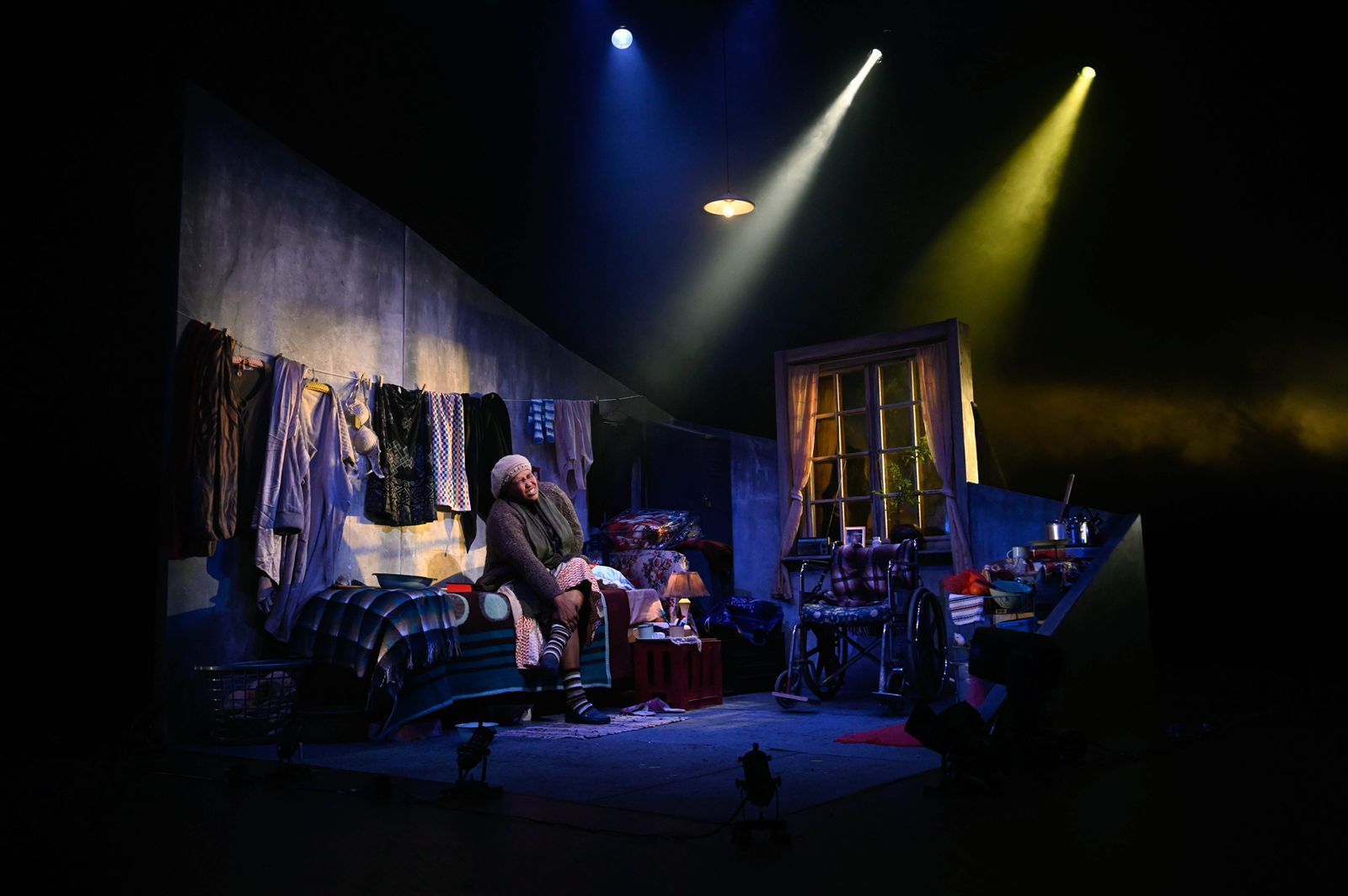
That listening became a musical theatre production: a fictional but close re-telling of regional stories, following twins Nkosana and Makhosazana as they inherit a coastal kingdom and face the arrival of a fence that cuts their community off from land, resources, and the resting place of their ancestors. The production weaves humour, pathos, puppetry, ritual and music into a story that is both deeply local and urgently universal.
Thirteen young activist theatre-makers from the Mbazwana region became co-researchers, co-playwrights and performers — developing their existing talents into a form of professional expertise on the socio-cultural histories of their own home, and carrying that expertise into new and unusual territories of democratic governance and public consultation.
How It Works
Theatre as alternative archive, map and citizen assembly...
The central injustice Umkhosi Wenala responds to is the injustice of mapping. Land and sea are divided and allocated through spatial planning processes drawn mainly from the biological sciences and economics. The spiritual, social, and interwoven cultural knowledge that is also impacted by these spatial plans and zonations is seldom considered. With the legacies of apartheid, many perspectives and histories have been excluded from decision-making altogether.
The production creates a living counter-archive — re-mapping the region in vernacular isiZulu, from local people's perspective, and then exploring alongside the audience what a new map might look like. Participants mark the floor with chalk. They narrate childhood memories of place. They add stories to a two-hundred-year timeline. Gradually the space comes alive with what has been excluded.
The post-show facilitated discussion, led by marine sociologist and co-creator of Umkhosi Wenala Dr Philile Mbatha, turns the audience into a citizen assembly, discussing new approaches to the kinds of decisions that spatial planning, environmental impact assessments, and marine protected area governance are supposed to make on their behalf.
"The most unbelievable part of the production was not the mystical coelacanth carrying an ancestor from the sea — it was the moment when a young woman stands up and speaks in a public meeting. That never happens in real life in our community."
Young woman audience member, Mbazwana 2022
That young woman later wrote in her feedback form that watching the lead female protagonist speak her mind had given her the courage to do the same in the post-show discussion. This is the kind of shift Empatheatre's call-and-response method is built to create: to collaboratively and iteratively re-narrative history, surface injustices, respond to these and explore a new sense of what is possible for the people living within this complexity.
Watch the Film
Festival of Abundance: The Making of Umkhosi Wenala...
A documentary unpacking the Empatheatre methodology, the devising process, and the major themes of the production. Available on our YouTube channel
Looking Ahead
A peoples' charter for marine protection...
Beyond this tour, Empatheatre and the Mbazwana Creative Arts continue to develop the production as a living instrument for public consultation. The post-show discussions are being used as a think tank to draft a peoples' charter on marine protection — a document co-authored by the communities most affected by MPA expansion, in their own language and from their own knowledge systems.
The production is also available to organisations undertaking Environmental Impact Assessments, Strategic Environmental Assessments, and policy consultation processes as an alternative public consultation methodology ; one that centres intangible cultural heritage, Indigenous knowledge, and the voices of those who have historically been excluded from the rooms where decisions are made.
We go to St Lucia and Kosi Bay next week with gratitude; for the communities who trusted us with their stories, for the thirteen young people from Mbazwana who became the artists and researchers this work needed, and for the ongoing possibility of theatre as a space where a different kind of knowing is allowed to speak.
May the sacred stories return.
Read our IMPACT REPORT on Umkhosi Wenala
Read our
Paper: Mapping for connection, a life beyond mapping for control: lessons from ‘mapping-as-performance’ with Empatheatre in South Africa